
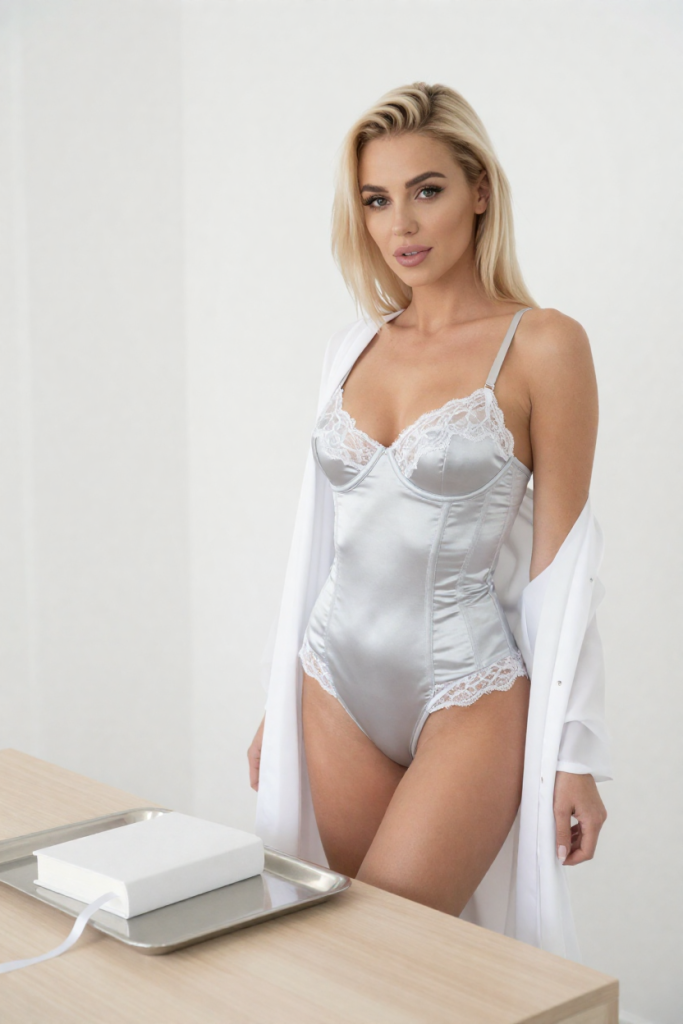
Visitors sometimes ask why the biography rests on a tray, as if it were being served. In a sense it is — and the sense is the method. A tray is where a household puts only what has been chosen. Nothing reaches it by accident, nothing rests on it half-decided. This studio drafts widely and privately, culls without sentiment, and the tray is the visible end of that discipline: what is on it has been approved.
Presentation is a decision, not a decoration
Studios drift when approval is vague — when a frame is ‘probably a keeper’ and travels downstream on a probably. The tray habit replaces probably with a place: a frame is either on the tray, judged and chosen, or it is not, and downstream tools — the editor, the swaps, the upscalers — only ever receive what is on it. Drift hates a gate, and the tray is a gate you can see.
The biography on it
The book on the tray is closed — cover plain, pages blank of any lettering, ribbon trailing from the spine. The pair is the room’s signature and its method in one image: the book is the life, the tray is the choosing of what from that life gets presented. When you brief a frame here, you are deciding in advance what ‘chosen’ will have to mean.
Questions
Do I have to use a tray in my frames?
No — it is the house’s own habit, not a rule for members. But some visible threshold of your own, between draft and chosen, will do the same work for your series.
Why is the book always closed?
Because nothing in it is meant to be read. A closed, letter-free cover keeps the frame about the woman and the sitting, never about text.
What belongs on my tray?
Frames that passed the card check and have a named job. Everything else stays in the private library, unjudged and unspent-on.